The daily Connections puzzle has become a favorite challenge for people who enjoy word games, pattern recognition, and quick mental exercises. For players searching for connections hint today mashable, the goal is usually not to get the complete solution immediately but to find enough guidance to make progress without losing the fun of solving the puzzle independently.
Connections is a game in which players are given a matrix of words to partition into four sets of four words related to each other. Some connections can be very clear and some are specifically cast in ways that should lead to a false connection. Occasionally the words may seem to belong to more than one category, requiring careful reasoning.
Hints are very helpful if you aren’t sure which of several options to choose. If approached correctly, clues can be a guiding force rather than a quick method to solve the ending groups, still giving the satisfaction of completing the groups yourself.
What Is the Connections Puzzle?
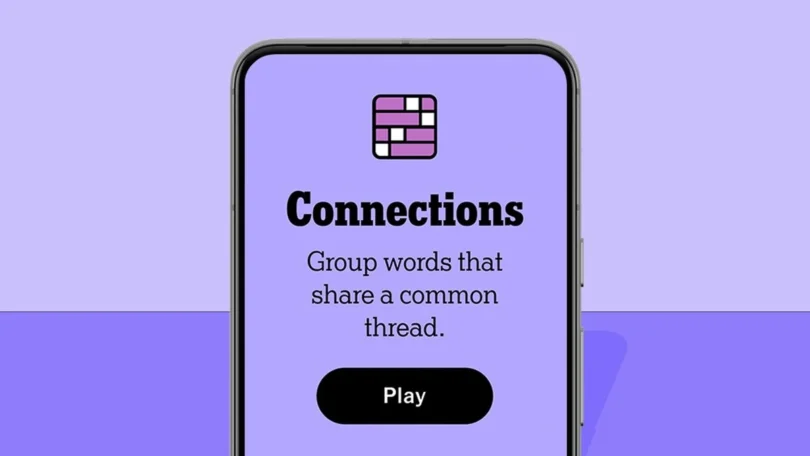
Connections is a daily word puzzle in which players receive 16 words and must organize them into four groups of four.
Groups have a particular connection. It can be a common theme, category, phrase, word combination, cultural reference or another type of association.
The difficulty is not in finding any relationship between words, but in figuring out what relation the writer has in mind.
For instance, food could be one of the categories, and there could be several words and only four of those could be from the same intended category. You can have a secondary association in another word that can cause it to look as if it belongs to more than one association.
The deliberate ambivalence is a key element in the puzzle.
Players are typically given a limited number of wrong guesses, which means that they can easily and quickly get the entire category wrong.
It is best to look at all 16 words before selecting a group.
Understanding the Color-Coded Difficulty
Connections uses different colors to indicate the relative difficulty of its groups.
The yellow group is generally the easiest to identify. These words tend to have a more direct or familiar relationship.
The green group usually requires a little more thought because the connection may be less obvious.
Blue categories often involve more specialized knowledge, wordplay, or cultural references.
Purple is typically the most challenging group and frequently depends on clever wording, unusual relationships, prefixes, suffixes, or other word-based tricks.
Understanding this structure can help you decide where to begin.
Rather than immediately searching for the hardest connection, start with the group that appears most obvious. Removing four confirmed words makes the remaining puzzle considerably easier.
How to Use Hints Without Spoiling the Answer
A good hint should help you think rather than simply reveal the solution.
If you’re using a daily hint article, start with the broadest clue available.
For example, a clue might indicate that a category involves a particular type of object, profession, activity, or phrase. That information may be enough to identify the group yourself.
If you’re still stuck, look for a slightly more specific hint.
Avoid jumping directly to the full answers unless your goal is simply to check your completed puzzle.
This approach preserves the challenge while reducing frustration.
Another useful technique is to pause after reading a hint. Give yourself a few minutes to reconsider the word grid before looking for additional information.
Often, one small clue is enough to make several relationships suddenly become clear.
Strategies for Solving Connections More Effectively
Start by scanning the entire grid instead of focusing on one word.
Look for obvious groups first. Words that clearly belong together can provide a strong starting point.
After identifying a potential group, test every word carefully before submitting it.
Ask yourself whether there is another word that fits the same category more naturally.
This is important because Connections frequently includes decoy relationships.
For instance, four words may appear related because they can follow the same adjective, but one of them might actually belong to a different category.
Pay attention to exact wording as well.
Singular and plural forms, abbreviations, meanings, sounds, and common phrases can all matter.
If a group seems too broad, it probably isn’t the intended category.
The strongest Connections categories usually have a precise relationship shared by all four words.
Common Traps and How to Avoid Them
One of the biggest mistakes players make is committing to a category too early.
Seeing three related words can create a strong sense that you’ve found the answer. However, the fourth word may reveal that the connection is actually a decoy.
Another common mistake is ignoring less obvious meanings.
A word can have multiple definitions, and Connections may use an alternative meaning to create a category.
Proper nouns can also be deceptive. A familiar name might initially seem unrelated to the surrounding words but could belong to a group based on a shared characteristic.
Players should also avoid assuming that categories must be based on identical types of objects.
Some groups may be based on phrases, word construction, sounds, abbreviations, or cultural references.
The key is to remain flexible.
If a theory doesn’t explain all four words cleanly, don’t force it.
What Makes Mashable-Style Hints Useful?
Searches for Connections hints often lead players to publications such as Mashable because these guides are designed to provide assistance without necessarily removing the entire challenge.
A useful daily puzzle guide typically separates hints from answers, allowing readers to choose how much help they want.
This format works well for players at different skill levels.
Someone who is only slightly stuck may need one category clue, while another player may need more detailed assistance.
The best way to use such resources is selectively.
Read the first hint, return to the puzzle, and try again.
If you solve the category, stop there. If you’re still uncertain, continue to the next level of assistance.
This turns a hint guide into a problem-solving tool rather than an answer sheet.
Building Better Word-Association Skills
Regular Connections play can improve your ability to identify relationships between words.
The puzzle encourages lateral thinking because the obvious meaning of a word isn’t always the relevant one.
It also strengthens vocabulary by exposing players to unfamiliar expressions, references, and alternative meanings.
A useful habit is to ask several questions about each word:
What does this word mean?
Can it be part of a common phrase?
Does it have another definition?
Could it be a name, abbreviation, or title?
Can it be associated with an object, activity, or concept?
Thinking through these possibilities makes it easier to recognize less obvious categories.
Over time, you’ll become more comfortable switching between literal and abstract interpretations.
Final Thought
Connections hint today Mashable searches reflect the growing popularity of daily word puzzles and the desire for just enough help to keep solving enjoyable. Connections rewards patience, careful observation, and the ability to recognize relationships that aren’t immediately obvious.
Start with the easiest set of words, check for each word before submitting, and use caution in dealing with terms that are overly general. If you need help, use hints slowly and progressively, rather than checking the complete solution right away.
Finally, it’s not just about completing the picture. The true fun is in figuring out the underlying relationship with the words and why they are grouped under one title when they seem totally unconnected and unrelated.
There’s a way to make a difficult Connections grid manageable—and even fun—with practice and a careful approach.
FAQs
What is Connections?
Connections is a daily word puzzle where players organize 16 words into four groups of four based on shared relationships.
Why do people search for Connections hints?
Players often use hints when they are stuck on a category but still want to solve most of the puzzle themselves.
What is the best way to use a Connections hint?
Start with a broad clue and attempt the puzzle again before looking for a more specific hint or the complete solution.
Which Connections category is usually the easiest?
The yellow category is generally considered the easiest, while purple is usually the most challenging.
Why does Connections include misleading words?
Decoy words make the puzzle more challenging by creating multiple possible associations and encouraging players to think carefully before guessing.
Can playing Connections improve vocabulary?
Regular play can encourage vocabulary development and strengthen pattern recognition by exposing players to different meanings, phrases, and associations.
Should I check the answers if I can’t solve the puzzle?
There’s nothing wrong with checking the solution, but using hints first can preserve the challenge and help you develop better solving strategies.