Most startups fail to scale their marketing not because they lack ideas, but because they lack the team to execute them consistently.
For startups and small businesses, growth often comes with a frustrating reality: you need more marketing to scale, but you don’t have the people to make it happen.
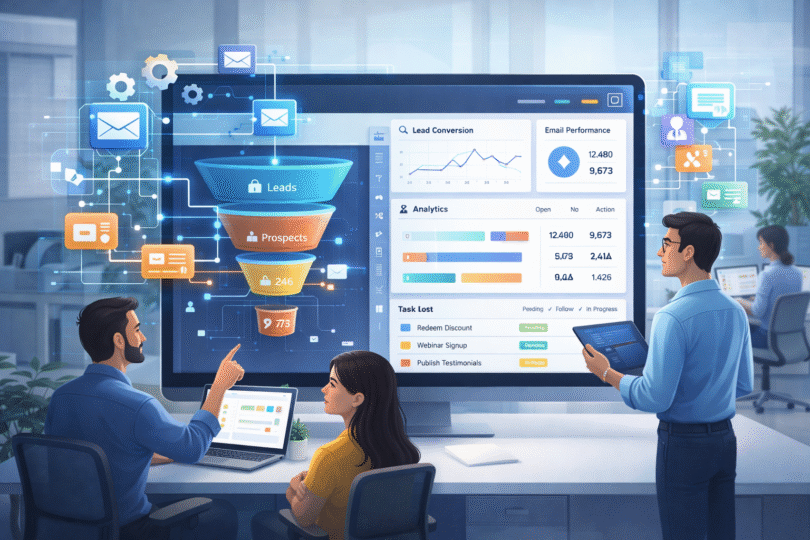
By using an infographic maker, businesses can present funnel performance and optimization strategies effectively.
Hiring a full marketing team sounds ideal—content writers, ad specialists, email marketers, social media managers—but the cost quickly becomes overwhelming. Salaries, onboarding, and management overhead can drain resources before you even see results.
That’s where automation changes the game.
Instead of relying on a large team, modern marketing tools allow you to build systems that work 24/7—capturing leads, nurturing prospects, and converting customers with minimal manual effort. It’s not about replacing humans entirely, but about working smarter with the resources you already have.
In this article, you’ll learn how to understand your marketing funnel, where small teams typically struggle, and why automation is often a better early-stage investment than hiring more people.
Understanding the Marketing Funnel
Before you can automate anything, you need to understand what you’re automating.
A marketing funnel is the journey your potential customers go through—from discovering your brand to becoming loyal buyers. It’s typically broken down into four key stages:
Awareness
This is where people first discover your business—through social media, ads, blog posts, or search engines.
Challenge: Small teams struggle to consistently create and distribute enough content to stay visible.
Consideration
At this stage, potential customers are evaluating your product or service. They might read reviews, compare options, or sign up for your email list.
Challenge: Following up with every lead manually is time-consuming and often inconsistent.
Conversion
This is the moment a lead becomes a paying customer.
Challenge: Without proper systems, leads slip through the cracks due to slow responses or lack of structured follow-ups.
Retention
After the sale, your goal is to keep customers engaged and encourage repeat purchases.
Challenge: Maintaining relationships manually—through emails, offers, or updates—is difficult for small teams to sustain.
Across all these stages, the biggest bottleneck is manual work. When everything depends on human effort, delays happen, opportunities are missed, and growth slows down.
Why Automation Is Better Than Hiring (Early Stage)
When you’re just starting out, every dollar and every hour matters. This is why automation often beats hiring—at least in the early stages of growth.
Cost Efficiency
Hiring even a small marketing team can cost thousands of dollars per month. In contrast, automation tools often come at a fraction of that price.
Instead of paying multiple salaries, you can invest in tools that handle email campaigns, lead tracking, and customer engagement automatically.
Time Savings
Manual marketing tasks—sending emails, posting content, tracking leads—take up valuable time. Automation eliminates repetitive work, freeing you to focus on strategy and growth.
Scalability
A human team has limits. Automation doesn’t.
Whether you have 10 leads or 10,000, automated systems can handle the load without needing additional hires.
Consistency
People get tired. Systems don’t.
Automation ensures that every lead gets the same timely follow-up, every customer receives onboarding emails, and every campaign runs as planned—without gaps or delays.
In the early stages, hiring too quickly can actually slow you down. Automation allows you to build a solid marketing foundation first—so when you do hire, your team can focus on higher-level strategy instead of repetitive tasks.
Key Areas You Can Automate
Once you understand your marketing funnel, the next step is identifying where automation can make the biggest impact. The good news is—you don’t need to automate everything at once. Even a few well-placed systems can dramatically reduce workload and improve results.
Let’s break down two of the most important areas to start with.
Lead Generation
Lead generation is the top of your funnel—and often the most time-consuming part if done manually. Automation allows you to consistently attract and capture potential customers without constant hands-on effort.
At the core of automated lead generation are landing pages. These are focused web pages designed with a single goal: to convert visitors into leads. Instead of sending traffic to a generic homepage, you guide users to a page that clearly explains your offer and encourages action.
To capture information, you use forms integrated directly into these landing pages. These forms collect essential details like name and email, and once submitted, the data is automatically stored in your system—no manual entry required.
To make people actually want to share their information, you offer lead magnets. These can be:
- Free eBooks or guides
- Checklists or templates
- Webinars or mini-courses
- Discount codes or free trials
The real power comes from connecting everything through basic integrations. For example, when someone fills out a form:
- Their data is instantly added to your email list
- They receive a welcome email automatically
- They may be tagged or segmented based on their interest
This means your lead generation system keeps running in the background—capturing and organizing prospects even while you sleep.
Email Nurturing
Capturing leads is only half the battle. The real value comes from turning those leads into paying customers—and that’s where email automation becomes essential.
Instead of manually following up with every prospect, you can create automated email sequences that guide users through your funnel step by step.
One of the most important elements is the welcome sequence. As soon as someone joins your list, they receive a series of pre-written emails that:
- Introduce your brand
- Deliver the promised lead magnet
- Build trust and credibility
From there, you can set up drip campaigns—a sequence of emails sent over time. These emails educate, provide value, and gradually move the lead closer to making a purchase. For example, a 5-day drip campaign might include tips, case studies, and product benefits.
What makes automation even more powerful is behavior-based email triggers. These are emails sent based on user actions, such as:
- Clicking a specific link
- Visiting a pricing page
- Abandoning a cart
- Not opening emails for a certain period
This allows you to send highly relevant messages at exactly the right time—without manual intervention.
Many startups rely on tools like Tenomail email marketing platform to set up automated email sequences that nurture leads and convert them into customers over time. These platforms simplify everything from building workflows to tracking performance, making it easy for small teams to operate like a much larger marketing department.
By automating lead generation and email nurturing, you essentially build a self-sustaining system—one that continuously attracts, engages, and converts your audience with minimal ongoing effort.
Conversion Automation
Generating leads and nurturing them is important—but the real turning point in your funnel is conversion. This is where interest becomes revenue. Unfortunately, this is also where many small teams lose potential customers due to slow responses or inconsistent follow-ups.
Automation solves this by ensuring that no lead is forgotten and every opportunity is handled at the right time.
One of the most effective ways to improve conversions is through automated follow-ups. When a potential customer shows interest—downloads a resource, requests a demo, or clicks on a pricing page—automation can instantly trigger a personalized follow-up email. Instead of waiting hours or days, your system responds within minutes, keeping the momentum alive.
Another powerful element is reminder emails. Many users don’t convert on their first visit. They get distracted, compare options, or simply forget. Automated reminders help bring them back. For example:
- A reminder after a free trial is about to expire
- A follow-up after a demo request
- A gentle nudge for incomplete sign-ups
These small touchpoints can significantly increase conversion rates without any manual effort.
To tie everything together, you can use simple CRM triggers. A CRM (Customer Relationship Management system) tracks where each lead is in your funnel. Based on their behavior, it can:
- Move leads between stages automatically
- Assign tags or scores to prioritize hot prospects
- Trigger specific actions like sending offers or notifying you when a lead is ready to buy
The result is a system that reacts intelligently to user behavior—guiding each lead toward conversion in a structured and timely way.
Retention & Engagement
Many businesses focus heavily on acquiring customers but overlook what happens after the sale. In reality, retention is where long-term growth and profitability are built—and automation makes it much easier to maintain strong customer relationships.
The first step is setting up onboarding emails. When someone becomes a customer, they shouldn’t be left guessing what to do next. An automated onboarding sequence can:
- Welcome them to your product or service
- Show them how to get started
- Highlight key features or benefits
- Reduce confusion and support requests
A smooth onboarding experience increases satisfaction and reduces churn from the very beginning.
Over time, some customers will naturally become less active. This is where re-engagement campaigns come in. These automated campaigns are triggered when a user becomes inactive—for example, not opening emails or not using your product for a certain period. You can send:
- “We miss you” emails
- Special offers or incentives
- Helpful content to bring them back
Even a small percentage of reactivated users can make a big difference in overall revenue.
Finally, newsletters help you stay consistently connected with your audience. Instead of manually sending updates, you can automate regular communication that includes:
- Product updates
- Valuable tips or insights
- Promotions or announcements
This keeps your brand top-of-mind without requiring constant effort from your team.
Essential Tools to Build Your Funnel
To successfully automate your marketing funnel, you don’t need dozens of complicated tools—you just need the right categories of tools working together.
Think of your marketing system as a stack, where each layer handles a specific function.
Email Marketing Tools
These tools are the backbone of your automation strategy. They allow you to create email sequences, segment your audience, and track engagement. Features typically include:
- Automated workflows
- Drip campaigns
- Performance analytics
They are essential for nurturing leads and maintaining customer relationships at scale.
CRM (Customer Relationship Management) Systems
A CRM helps you organize and track your leads throughout the funnel. Instead of relying on spreadsheets or memory, you get a clear view of:
- Who your leads are
- What actions they’ve taken
- Where they are in the buying journey
CRMs also enable automation through triggers, helping you move leads closer to conversion without manual tracking.
Automation Tools (Workflow Builders)
These tools connect everything together, allowing different platforms to “talk” to each other and automate actions based on events. For example:
- When a form is submitted → add contact to email list
- When a lead reaches a certain score → send a sales email
- When a purchase is made → trigger onboarding sequence
Platforms like Corexta take this even further by centralizing project management, CRM, finance, and team workflows in one hub. This helps small teams and agencies reduce manual effort, stay organized, and manage operations efficiently—all from a single platform.
They act as the glue that turns separate tools into one seamless system. The key is not to overcomplicate your setup. Start with a simple combination of email automation, a basic CRM, and a workflow tool. As your business grows, you can expand and refine your stack—but even a lean system can deliver powerful results when set up correctly.
Step-by-Step: Build Your First Automated Funnel
By now, you understand the theory behind automation. Let’s turn that into action with a simple, beginner-friendly process you can implement without a large team or technical complexity.
The key is to start small and build a system that you can improve over time.
Step 1: Define Your Target Audience
Everything starts with clarity. You need to know exactly who you’re trying to attract. Identify:
- Their main problems
- Their goals
- What kind of solutions they’re searching for
This helps you create messaging that actually connects. Without this step, even the best automation won’t perform well.
Step 2: Create a Lead Magnet
Once you know your audience, offer them something valuable in exchange for their contact information. This is your lead magnet.
It doesn’t need to be complicated. A simple checklist, short guide, or template that solves a specific problem is enough to get started. The goal is to provide immediate value and build trust from the first interaction.
Step 3: Set Up Email Automation
Now that you’re collecting leads, you need a system to nurture them automatically.
Start with a basic email sequence:
- A welcome email that delivers your lead magnet
- A few follow-up emails that educate and build trust
- A final email that introduces your offer
This sequence works in the background, turning new subscribers into potential customers without manual effort.
Step 4: Connect Your Tools
Your funnel becomes powerful when everything is connected.
Make sure:
- Your landing page form sends data to your email tool
- Your email platform triggers the right sequences
- Your CRM tracks user activity and progress
Even simple integrations can create a seamless flow where each step triggers the next automatically.
Step 5: Test and Optimize
No funnel is perfect from day one. The real growth comes from improving it over time.
Pay attention to:
- Email open and click rates
- Conversion rates on your landing page
- Drop-off points in your funnel
Make small adjustments—like changing subject lines, improving copy, or tweaking timing—and measure the impact. Over time, these small improvements compound into significant results.
Common Mistakes to Avoid
While automation can save time and scale your marketing, it’s easy to misuse it—especially in the early stages. Avoiding these common mistakes will help you get better results with less frustration.
One major mistake is over-automation.
Trying to automate everything at once can make your system overly complex and difficult to manage. Instead, focus on the essentials first—lead capture and email nurturing—then expand gradually.
Another common issue is a lack of personalization.
Automation doesn’t mean sounding robotic. If your emails feel generic, people will ignore them. Use names, tailor messages based on behavior, and make your communication feel human.
Poor segmentation is another hidden problem.
Not all leads are the same. Some are ready to buy, while others are just exploring. Sending the same message to everyone reduces effectiveness. Segment your audience based on interests, actions, or stage in the funnel for better engagement.
Finally, many startups make the mistake of ignoring analytics.
Automation tools provide valuable data—but if you’re not reviewing it, you’re missing opportunities to improve. Regularly check performance metrics and use them to guide your decisions.
Conclusion
Scaling your marketing doesn’t have to mean building a large, expensive team from day one.
With the right approach, automation allows small teams to operate efficiently, stay consistent, and grow without overwhelming resources. Instead of chasing every task manually, you create systems that handle the heavy lifting—freeing you to focus on strategy and growth.
The most important thing is to start.
You don’t need a perfect funnel or advanced setup. Begin with a simple system: capture leads, nurture them with email, and gradually improve your process. As your business grows, your automation can grow with it—becoming more refined, more personalized, and more powerful over time.
In the end, smart systems will always outperform scattered effort. Start small, stay consistent, and let automation do what it does best—help you scale without the stress of building a big team too soon.